
Introduction
Fault Passage Indicator technology has become one of the most important advancements in modern power distribution systems. As electrical networks continue to expand across industrial facilities, utility grids, renewable energy projects, and commercial infrastructures, the need for rapid fault detection has become increasingly critical. Even a minor fault in a distribution network can lead to power outages, equipment damage, operational disruptions, and significant financial losses. Utilities and industries are therefore investing in intelligent monitoring systems that can identify faults quickly and accurately before they escalate into larger problems.
A Fault Passage Indicator helps operators locate faults within electrical networks in real time. Instead of spending hours inspecting feeders, cables, and distribution lines manually, maintenance teams can immediately identify the affected section and take corrective action. This not only reduces downtime but also improves overall network reliability and customer satisfaction. As power systems become smarter and more interconnected, the role of the Fault Passage Indicator continues to grow, making it an essential component of modern electrical infrastructure.
What is a Fault Passage Indicator?
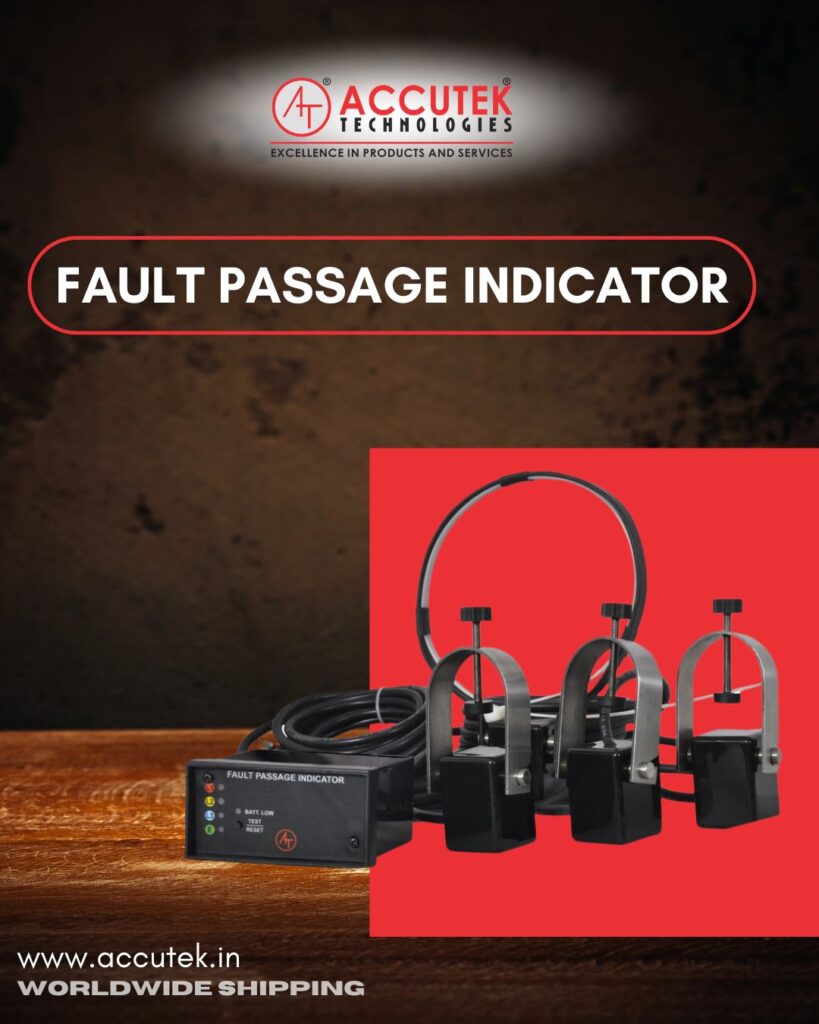
A Fault Passage Indicator is an advanced monitoring device designed to detect fault currents in electrical distribution systems. The device continuously observes current flow and identifies abnormal conditions such as short circuits, earth faults, and phase-to-phase faults. When a fault occurs, the indicator instantly activates and provides visual or remote signals to operators, helping them identify the faulted section of the network.
Unlike traditional fault-finding methods that require extensive field inspections, a Fault Passage Indicator offers immediate fault location information. This capability dramatically reduces restoration times and helps utility companies maintain uninterrupted service. Modern indicators can also communicate with SCADA systems, enabling remote monitoring and real-time fault analysis. These advanced capabilities have transformed the way utilities and industrial facilities manage electrical faults and maintain operational efficiency.
How the Fault Passage Indicator Improves Network Reliability
Reliability remains one of the most important performance indicators for any electrical distribution network. Customers expect a continuous power supply, and even short interruptions can impact productivity, safety, and revenue. A Fault Passage Indicator enhances network reliability by enabling operators to locate and isolate faults much faster than conventional methods.
When a fault occurs, operators often need to inspect multiple sections of a network to determine the source of the problem. This process can be time-consuming, particularly in large distribution systems that cover vast geographical areas. A Fault Passage Indicator eliminates much of this uncertainty by identifying the exact section where the fault has occurred. As a result, maintenance teams can restore service more quickly, reducing outage duration and minimizing disruptions for customers.
The ability to detect faults rapidly also prevents fault conditions from spreading to other parts of the network. By isolating the affected area, operators can protect healthy sections of the system and maintain service continuity wherever possible. This contributes significantly to overall grid reliability and operational stability.
The Role of the Fault Passage Indicator in Reducing Downtime
Downtime is one of the most expensive consequences of electrical faults. Industrial facilities can lose production hours, commercial establishments may experience operational disruptions, and utility providers can face penalties associated with poor service performance. A Fault Passage Indicator plays a crucial role in minimizing these losses by reducing the time required to locate and repair faults.
Traditional fault location methods often involve extensive troubleshooting and manual inspections. Maintenance teams may need to inspect multiple feeders, substations, and cable sections before identifying the fault source. This process can take several hours or even longer in complex distribution networks. With a Fault Passage Indicator, fault information becomes available almost immediately, enabling technicians to focus their efforts directly on the affected location.
The reduction in fault location time translates directly into faster power restoration. Customers experience shorter outages, industrial processes resume more quickly, and utilities improve their service reliability metrics. Over time, these benefits generate significant operational and financial advantages.
Enhancing Safety Through Fault Passage Indicator Technology
Safety is another critical factor driving the adoption of Fault Passage Indicator systems. Electrical faults can create hazardous conditions that pose risks to maintenance personnel and equipment. Identifying the exact location of a fault before dispatching technicians helps reduce exposure to potentially dangerous situations.
When maintenance teams know precisely where a fault has occurred, they can approach repairs with greater confidence and efficiency. This reduces unnecessary inspections and minimizes the risk associated with working near energized equipment. In addition, early fault detection helps prevent equipment failures that could otherwise result in fires, explosions, or extensive damage to electrical assets.
By supporting safer maintenance practices and improving fault management procedures, a Fault Passage Indicator contributes to a safer working environment for utilities and industrial organizations alike.
Why Utilities Are Adopting Fault Passage Indicator Systems
Utility companies worldwide face increasing pressure to improve service reliability while controlling operational costs. Customers expect an uninterrupted power supply, regulators demand higher performance standards, and infrastructure continues to become more complex. These challenges have encouraged widespread adoption of Fault Passage Indicator technology.
Utilities benefit from improved fault visibility, faster restoration times, and reduced maintenance expenses. The ability to identify fault locations accurately allows operators to deploy resources more effectively and avoid unnecessary field inspections. Furthermore, many modern Fault Passage Indicator solutions integrate with digital communication platforms, supporting smart grid initiatives and advanced network automation.
According to information available from the official website of the Institute of Electrical and Electronics Engineers (IEEE), modern power systems increasingly rely on intelligent monitoring technologies to improve grid performance and reliability. This trend continues to drive the demand for advanced fault detection solutions across global markets.
Applications of the Fault Passage Indicator Across Industries
The applications of Fault Passage Indicator technology extend far beyond traditional utility networks. Industrial manufacturing facilities use these devices to protect production operations from unexpected outages. Renewable energy installations rely on fault monitoring systems to maintain stable power transmission. Commercial complexes, airports, transportation infrastructure, hospitals, and data centers also benefit from rapid fault detection capabilities.
In underground cable networks, locating faults can be particularly challenging due to limited visibility. A Fault Passage Indicator simplifies this process by providing immediate information about the affected cable section. Similarly, overhead distribution networks can utilize fault indicators to identify fault locations across long transmission distances, improving restoration efficiency and reducing service interruptions.
The versatility of these devices makes them suitable for a wide range of operating environments, ensuring reliable performance across diverse applications.
Choosing the Right Fault Passage Indicator
Selecting the appropriate Fault Passage Indicator requires careful evaluation of operational requirements and network characteristics. Factors such as fault sensitivity, communication capabilities, environmental protection ratings, installation methods, and compatibility with existing systems should all be considered.
Organizations should choose solutions from experienced manufacturers capable of delivering reliable performance and long-term support. Advanced indicators that integrate with SCADA and remote monitoring systems offer additional advantages, particularly for utilities pursuing smart grid modernization initiatives.
Businesses seeking high-quality fault monitoring solutions can explore products available through Accutek Technologies, where specialized electrical monitoring and protection solutions are available for various industrial and utility applications.
Why Choose Accutek Fault Passage Indicator?
When it comes to fault detection in electrical distribution networks, reliability and accuracy are critical. Accutek’s Fault Passage Indicator is designed to help utilities, industrial facilities, substations, and infrastructure projects identify fault locations quickly and efficiently. With robust construction, dependable performance, and easy installation, the system helps reduce outage durations and improve overall network reliability.
Accutek focuses on delivering solutions that meet the practical needs of modern power distribution systems. The company’s fault monitoring products are engineered to perform in demanding operating environments while maintaining high levels of accuracy and consistency. Whether installed in overhead distribution networks, underground cable systems, or industrial power infrastructure, the Fault Passage Indicator provides fast fault identification that helps maintenance teams respond more effectively.
Another advantage of choosing Accutek is its commitment to quality and technical support. Organizations investing in fault monitoring systems require products that can operate reliably for years while supporting efficient maintenance practices. Accutek’s solutions are developed to help customers improve operational efficiency, protect valuable electrical assets, and support long-term network performance.
As power distribution systems continue to evolve, selecting a trusted manufacturer becomes increasingly important. Accutek combines industry experience, quality engineering, and customer-focused support to provide fault detection solutions that contribute to safer, smarter, and more reliable electrical networks.
FAQs
What is a Fault Passage Indicator?
A Fault Passage Indicator is a device used in electrical distribution systems to detect and indicate the occurrence of fault currents, helping operators locate faults quickly.
Where are Fault Passage Indicators commonly installed?
They are commonly installed in substations, ring main units, overhead distribution lines, underground cable networks, and industrial power systems.
How does a Fault Passage Indicator reduce outage time?
The device quickly identifies the faulted section of the network, allowing maintenance teams to locate and repair faults faster, reducing power restoration time.
Can Fault Passage Indicators be integrated with SCADA systems?
Yes, many modern Fault Passage Indicators support remote communication and can be integrated with SCADA and smart grid monitoring systems.
Why is a Fault Passage Indicator important for utilities?
It improves fault location accuracy, enhances network reliability, reduces maintenance costs, minimizes downtime, and supports faster power restoration.
How often should Fault Passage Indicators be maintained?
Maintenance schedules depend on operating conditions and manufacturer recommendations, but regular inspections help ensure optimal performance and reliability.
Conclusion
A Fault Passage Indicator has become an indispensable component of modern electrical distribution systems. Its ability to detect faults quickly, improve network reliability, reduce downtime, enhance safety, and support smart grid development makes it a valuable investment for utilities and industries alike. As electrical networks continue to grow in complexity, the importance of fast and accurate fault detection will only increase.
Organizations that implement advanced Fault Passage Indicator technology can achieve significant improvements in operational efficiency, customer satisfaction, and asset protection. By enabling faster fault location and restoration, these systems help create more resilient, reliable, and future-ready power distribution networks capable of meeting the demands of an increasingly connected world.